Well Paid Musician
Blog
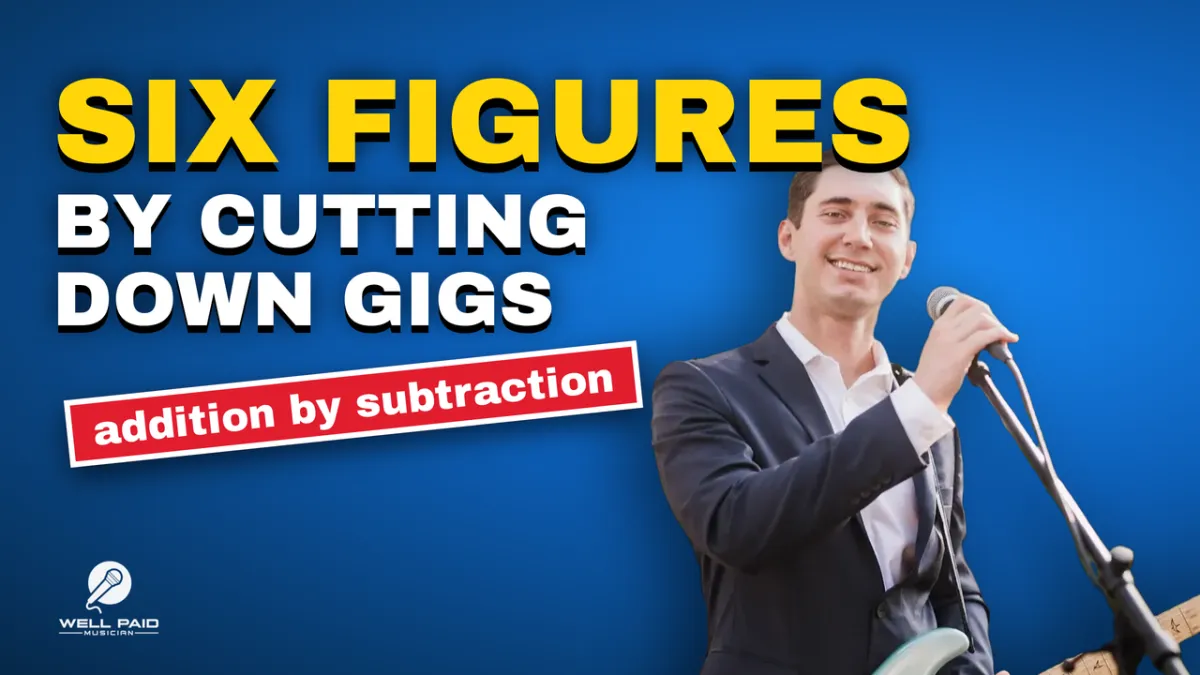
Why Logan Stopped Counting Gigs: How a Musician Built a Six-Figure Business on Fewer Gigs
Logan doesn’t look at how many gigs are on his calendar anymore. His wedding business is north of six figures, and he plays fewer gigs than he used to.
If that sounds backwards, it’s because most of us learned the music business in bars, where more gigs is the only way to more money. Logan is one of the original members of Well Paid Musician and now helps other members inside the community. On this week’s Coaches Corner, Matt sat down with him to unpack what he tracks instead of gigs, where his best leads come from, and why a slow calendar doesn’t scare him.
Stop counting gigs, start counting leads
A community member asked Logan about the biggest mindset shift going from bars to private events. His answer is the reason this episode is worth your time.
“These days I don’t ever even look at how many gigs I have on the calendar this month. I look at how many sales calls am I doing, how many leads are coming in, how many leads am I closing.”
Weddings book one to two years out. So the months with the fewest gigs are often his biggest revenue months. His example was January.
“After the holidays, almost nothing on the calendar, but tons of people that are booking their wedding music at that time. There’s really no correlation between how many gigs are on the calendar and how much money you’re making, compared to bar gigs where there very much is a direct correlation.”
An empty calendar used to mean “take anything that comes.” Now it means nothing at all. The pipeline is the business. The calendar is just where the pipeline shows up later.
The lead source that changed everything
Matt put it to him directly: you laid the foundation and now you’re reaping the benefits. What’s the biggest factor? Logan split it in two.
The intangible half is brand. How you present yourself, your social media, the quality of your videos. “It’s hard to quantify how updating your website or filming new videos directly leads to more work, but it definitely is something where over time you develop a sense for it.”
The tangible half is referrals. Specifically, from two places:
“Most significantly venues and wedding and event planners. Definitely the most consistent, high-quality leads. Higher quality in terms of how bought in they are to me specifically, and also a higher quality in terms of having a higher budget.”
Logan still runs some Instagram ads and gets Google traffic. But the referral leads from venues and planners are the ones with real budgets who already want him before they ever call. Those relationships are built one gig at a time, and they compound.
“Those first few years you’re kind of planting seeds. After four to five years at it, it’s compounded to the point where there’s no shortage of leads coming in now. The inputs were put in earlier, and now the wheel’s just kind of turning.”
Your best customers are your existing customers
Matt’s take on why this works:
“That’s how people are hitting six figures. It’s the combination of your best customers, your existing customers. In my case, some of my clients have been rehiring me for 20 years. And then there’s of course referrals. And you can consider vendors the same way. If you’ve worked with a vendor before and they’re referring you, you’re on a preferred vendor list, that all snowballs into where you’re at now, Logan.”
Every wedding puts you next to a planner, a venue manager, and a photographer who will be at another wedding next weekend. Do the job well and the gig becomes the marketing.
Cutting down gigs is not quitting gigs
Logan is honest about the fact that he kept the bar circuit going longer than he needed to.
“I kept the bar and restaurant thing for probably a lot longer than I should have. I definitely valued that consistency, and I think I probably could have pulled the plug earlier.”
He played his last bar gig in August 2025. For the two or three years before that, private events were already the majority, with the lower-paying gigs filling gaps. He didn’t quit gigging. He let the low-paying gigs fall away as the high-paying ones took over, and his income went up while his gig count went down.
The numbers are the peace of mind
Savannah summers are brutally hot, so Logan’s performing calendar slows down every year. He isn’t concerned, for two reasons. He has a cash reserve. And he knows the deposits keep coming in even when the performing slows down.
“Almost every single time what happens is I take enough new deposits throughout that time period that I don’t see any dip at all. The line keeps going up regardless.”
He also admitted the freak-out phase is real. This is the third or fourth year in a row he’s had a slow summer, and every year the worry got smaller. “This year it’s basically gone. I’ve just seen it time and time again how things actually shape out in the long term.”
If you’re in the freak-out phase right now, Matt’s take on the call was simple: everyone goes through it. The way out is the data. Look at what you’ve already done, treat it as proof, and keep doing the work.
“A bar gig and a private event are not the same gig”
Logan’s closing thought is the one to write down.
“When you’re coming from bar gigs, you tend to look at a gig as a gig. But a bar gig and a private event are not the same at all. The way you get hired, the price sensitivity, the cycle of when these events are booked. They’re both gigs, but they’re totally different in every way except for the fact that you’re playing music.”
Worrying about a seasonal dip makes sense in the bar world, where you play the gig and get paid the same night. In the private event world, the money you’ll make this fall was decided by the leads you worked last winter. Once that clicks, the calendar stops running your life.
The three phases
Matt pointed out that Logan’s story, told in his own words, lines up with the exact process we teach. Phase one is building your online presence so you have a quick way to get gigs and cash flow. Phase two is treating every gig as a chance to build relationships with the client and the vendors in the room. Phase three is reinvesting: better gear, better presentation, videographers, eventually paid advertising.
“It’s not overnight to scale your business to $10,000-plus months,” Matt said, “but it’s very doable.”
Logan didn’t get here with more talent or more gigs. He got here by changing what he measured and who he was in front of.
Want the full system working musicians use to build a private event business that books itself? That’s exactly what we do inside Well Paid Musician.
Watch the full episode with Logan: Why This Musician Stopped Counting Gigs.

Ready to scale your music business to six figures?
Want to Be A Part Of Our Success Story?
Hear what WPM students are saying about the program