Well Paid Musician
Blog
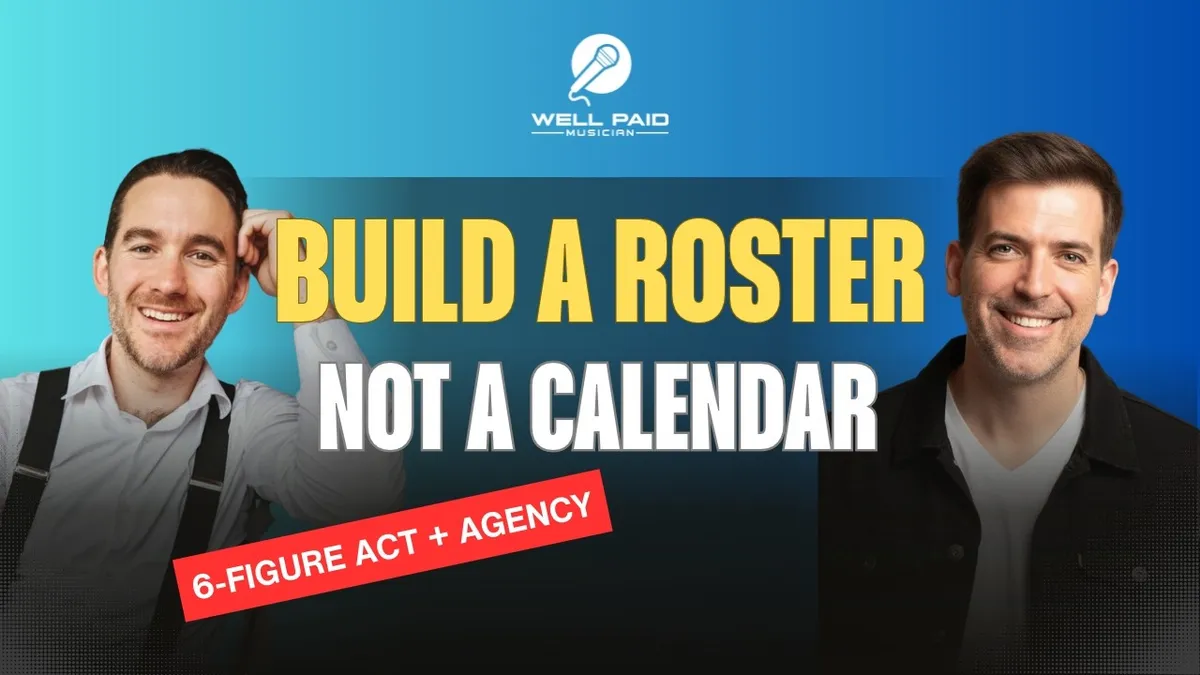
How a Six-Figure Wedding Duo Stopped Playing Every Gig
Joseph used to play somewhere between 70 and 80 events a year. Two or three gigs on a lot of weekends, plus some weeknights.
This past year, somewhere between a third and half of the events he and his partner Erika booked had a performer on them who wasn’t Joseph or Erika. The business is a six-figure act, and it’s still growing.
Joseph is a former Well Paid Musician member. He and Erika run a hybrid live music and DJ duo, and they’re building a roster of performers around it. Matt sat down with him to find out where their best bookings come from now, how they sell a date neither of them is playing, and why saying no feels so good.
You don’t have to do all the gigs
When you only book yourself, there’s a ceiling. Matt asked the question every busy performer eventually runs into: how many events can you physically play in a year? And how many do you actually want to play?
“Before you really start resenting it,” Joseph said.
He and Erika were both feeling it. So instead of grinding harder, they changed the model.
“The great thing about moving towards an agency or a multi-op model is you don’t have to do all the gigs. If you have really great people who you trust, who are really talented, who understand what the job is, there’s just a lot of room to run.”
Joseph also found something he didn’t expect. He likes building the business as much as playing in it.
“In some ways, I enjoy it even more than the performing side. I would never wanna give up performing entirely. But it’s fun to own something and have full control over where it goes. The sky’s the limit.”
Where the best bookings come from
In the early days, Joseph and Erika leaned on a wedding listing site. The cost was “a little bit hard to swallow” at first, and it paid for itself many times over. They’ve also had success with search and with Facebook and Instagram ads, and Joseph wants to try ads again now that the roster means more open dates.
But that’s not what drives the business today. Matt calls those sources entry points, and he’s clear about their role.
“I don’t know a single performer or an agency making six figures or more that solely relies on those entry points. They’re part of an ecosystem. It’s the network that they have built, the brand that they have built, that have gotten them there.”
Joseph’s numbers back it up. The leads that come from a past client or a friend’s recommendation are the ones that book. About half of them say yes.
“If it’s a warm lead, they’re gonna be much less focused on price. The wheels have already started turning in their head. This would be so awesome if we had these very specific people, this specific experience, at our event. They’ve already started to sell themselves.”
“The hard part’s done,” Matt said. “The trust is already won.”
The one question to ask after a compliment
Plenty of venues in their region now list Joseph and Erika as a recommended vendor. They didn’t get there with a pitch deck. They got there with one simple question, asked at the right moment.
When a venue lead or planner walks up after the night and says, “You guys were great, I’ve never seen anything quite like that,” Joseph asks if they have a vendor list.
“Oftentimes, almost exclusively, they’ll say, ‘Yeah. Please give me your card and we’ll add it.’”
Venues want this. A great act that’s easy to work with makes their job easier.
Compare that to cold-pitching venues, which we tell members not to do. Matt shared a story about a performer who finally got an introduction to a high-end venue, only to hear: “Oh, not that guy.” The venue had already written him off for spamming them. The compliment is the opening. The cold email is not.
Selling a date you aren’t playing
Here’s the part most performers assume they’re not ready for. Joseph and Erika’s website barely hints that they offer other acts. There are no polished artist pages yet. It worked anyway.
“We haven’t necessarily built all of the things that we need to sell what we’re selling, but it’s worked anyways. Because we’ve been able to just have conversations with people on a sales call, and say, ‘We’re not available, but we have these other options, these great musicians.’”
Their brand had already earned the trust. The conversation did the rest.
That’s what Matt calls done over perfect. In a world of chatbots and auto-replies, a real conversation with a real person “is gonna be a much stronger indicator of a person wanting to work with you than a great website.”
Joseph’s take on the nerves:
“No one client is gonna make or break your business. You can have a sales call that doesn’t go particularly well, and then you just move on to the next.”
As for who goes on the roster, they lean on Erika’s wide network from her years in the business. And when they need someone new, they find performers online. As Matt put it, “the way you used to get booked.”
Weddings aren’t about you (until the last 30 minutes)
A lot of performers are intimidated by weddings. Joseph’s advice is simple. Musically, it’s like any other event. The difference is the run of show, and who the night is really for.
“Certain parts of the event, they’re not about you. It’s about the couple. They need to be front and center, and you’re creating a soundtrack for their moment.”
But Joseph and Erika built in a moment where they get to be performers again. It’s become their calling card: they close the night by switching from the DJ set back to live music for a short set of acoustic sing-alongs.
“It’s like being at your favorite dive bar at the end of the night, and there’s a band on, and they’re just playing all your favorite songs.”
In the episode, Joseph shares the song he always opens with, and why he doesn’t even have to start singing before the whole room knows it.
You don’t have to live on social media
Joseph never had to give up his artist side to book private events. He also barely posts anymore. Not because he had to stop, but because he’d rather spend his time on other things.
What they do invest in is a small set of strong video assets that show what an event with them feels like. They keep that library on YouTube so they can point clients to it.
“Video’s the best way of showing somebody that experience without them actually being in the room.”
And the rest?
“It’s much easier and more direct to just do a really good job on an event, create a relationship with another person, and then see where that goes.”
“I’m gonna quote you on that,” Matt said. So we did.
“It feels really good to say no”
Before joining Well Paid Musician, Joseph was skeptical. “Is it really just that straightforward?” Looking back, here’s how he sees it:
“I have made many investments in continual learning around music business, and they didn’t all pay off. Well Paid Musician is probably one of the best investments I’ve made. It really was the beginning of my journey doing private events.”
His advice to his younger self is for anyone stuck playing three or four nights a week and not getting paid well for it: try something different. You don’t have to pay your dues by saying yes to everything.
“It feels really good to say no to stuff. To say, ‘That’s not worth my time, because I know what my value is, and it’s all the way up here, and I’m not compromising on that.’”
Matt’s response is the truth of this whole episode. You can’t download that confidence. You have to live it. Once you start getting tipped more than your old gigs used to pay you, raising your rates and saying no stop feeling risky.
Joseph didn’t grow his business by playing more. He grew it by building something that doesn’t need him on every stage.
Want a clear plan for building a private event business that pays like a real career? That’s exactly what we do inside Well Paid Musician.
Watch the full episode with Joseph on YouTube to hear how they sell the dates they aren’t playing.

Ready to scale your music business to six figures?
Want to Be A Part Of Our Success Story?
Hear what WPM students are saying about the program