Well Paid Musician
Blog
A Wedding Planner Explains Why She Ignores Most Musicians (and Who She Books Instead)
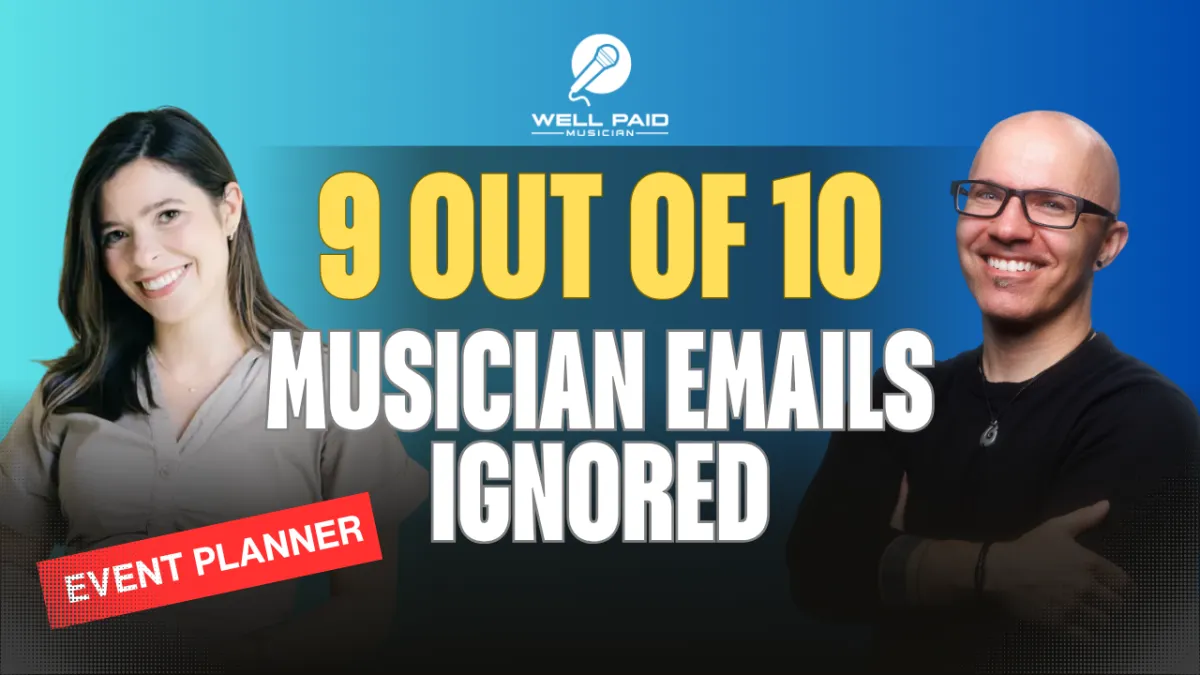
Haines books live music for high-end weddings for a living. Nine times out of ten, she does not reply when a musician emails her.
That is not a knock on musicians. It is how the private event world works, and almost nobody explains it to the people trying to break in. On this week’s Coaches Corner, Marty sat down with Haines, a high-end wedding planner, to ask the questions musicians usually only get answered the hard way: what gets you deleted, what gets you booked, and what a planner is really selling when she recommends you.
Planners are the middle you keep skipping
Most of us learned the music business in bars. You find a venue, you play, you get paid. When you move into weddings and private events, it is tempting to run the same play: find the couple, find the client, pitch them.
Marty’s point at the top of the episode is that there is a whole layer of people in between who see both sides.
“They see it from the musician’s side. They see it from the client’s side. An opinion like that is really valuable.”
Haines describes her role like a real estate agent or a general contractor. She is the client’s advocate. She books the vendors, manages the budget, reviews the contracts, and runs the day. If a client does not have a planner, she calls that a red flag. Work with the clients who do.
The email that gets deleted
Marty asked her straight: a musician finds your name on a website or a list, you have never heard of each other, and they send the “I’m in the area, I’d love to work with you” email. What happens?
“Nine times out of 10, I’m not gonna reply to cold emails, unless you name drop someone that I already know and respect.”
She gave a real example. Someone Marty had sent her way emailed, and her first reaction was “I don’t know who this person is. I’m busy.” Then she saw “Marty sent me” and the door opened.
Then she said the part most musicians never hear out loud:
“It’s more common for a planner to give a musician business rather than a musician to give a planner business. And at the end of the day, we’re in business.”
A planner has no reason to answer a stranger. She has every reason to answer a name she trusts.
The $50 list
Marty has seen programs that sell a list of every planner and venue in every city, with a script to cold-pitch them. He signed up for one to see it for himself. His reaction:
“No one who has a discerning taste in any kind of a vendor is just gonna give someone this kind of business. As a planner, you’re selling trust to your clients. If a client says, give me a recommendation, you’re never gonna just give a recommendation for someone who reached out to you out of the blue. Because where is the trust?”
This is exactly why we do not teach cold outreach inside Well Paid Musician. Matt said as much in the live comments during the episode, and Marty read it out: it starts with trust, and it has to happen on the job. A bot can send a text. AI can send an email. How you show up in a room is different.
Where she actually finds bands
So if not email, then what? Haines was specific.
“The best way to get exposure to a planner and get a planner’s eyes on you is to be performing for them. Not performing like schmoozing, but sponsoring at a networking event that they’re already showing up at. Maybe you’re DJ-ing at your local WIPA gala or NACE event. That’s nine times out of 10 how I find a lot of musicians.”
She had just come from a WIPA gala in Charlotte where a band “blew my socks off,” and her first thought was getting them in front of one of her clients as soon as possible. No pitch. No list. They played, she was in the room, and now she wants to book them.
Marty added the honest part: it is not a quick road. You do not meet someone once and walk away with a season of work. You meet people, they see you work, other vendors say good things about you, and the trust compounds.
“If five people tell me you’re great, I have more trust in you even though I’ve never worked with you before.”
What your price says before you speak
Marty asked whether a $500 act and a $2,400 act read differently before she ever calls them. Her answer was measured: pricing does not carry a ton of weight on its own. But one thing does.
“If you’re offering discounts, that’s kind of a red flag, ‘cause it means that you’re desperate and you’re not booking work.”
State your price and stand on it. The number itself is not what she is reading. The discount is.
She also explained why she needs to see your invoice on high-end events. Planners at that level price on a percentage of the total budget. What you charge affects what she makes, so hiding your number or changing it late is a problem for her, not just for you.
The red flags, in her words
Never hearing from you. No contract. No payment process. Payment due on the day of the event, when the client is busy and celebrating. And the one that costs people repeat work:
“If you don’t come find me and connect with the leader of the event, that’s kind of a red flag too. I’ve had plenty of musicians and DJs just ignore me when they show up and not touch base. Nine times out of 10, that has been the first not-a-good sign.”
Showing up in gym clothes to load in. Drinking at the gig, which she called “unprofessional and disrespectful to the client,” full stop. Answering three of the five questions in an email. None of these are about your playing. All of them decide whether she calls you again.
Your playing is 10% of the business
Haines’ closing thought is the one to write down.
“Your service is only 10% of running a business in the events industry. You need to learn how to wear 17 hats and be truly a business person. Communicating, showing up professionally, the way you speak, the way you dress, the way you use grammar and punctuation in emails. Having professional systems in place, like business insurance, a contract, payment methods that’s not Venmo. Once you take yourself seriously, that’s gonna be the biggest thing that sets you up for success.”
Read that from the buyer’s side. She is not comparing your set list to the next act’s. She is deciding whether you will make her look good in front of a client who paid her to get it right. Every system you put in place is a signal that you will.
The musicians who get booked by planners are not the ones who send the most emails. They are the ones who get seen doing the job well, communicate like a business, and give the planner a reason to trust them with her name.
Want the full system working musicians use to build a private event business that books itself, without cold outreach? That’s exactly what we do inside Well Paid Musician.

Ready to scale your music business to six figures?
Want to Be A Part Of Our Success Story?
Hear what WPM students are saying about the program