Well Paid Musician
Blog
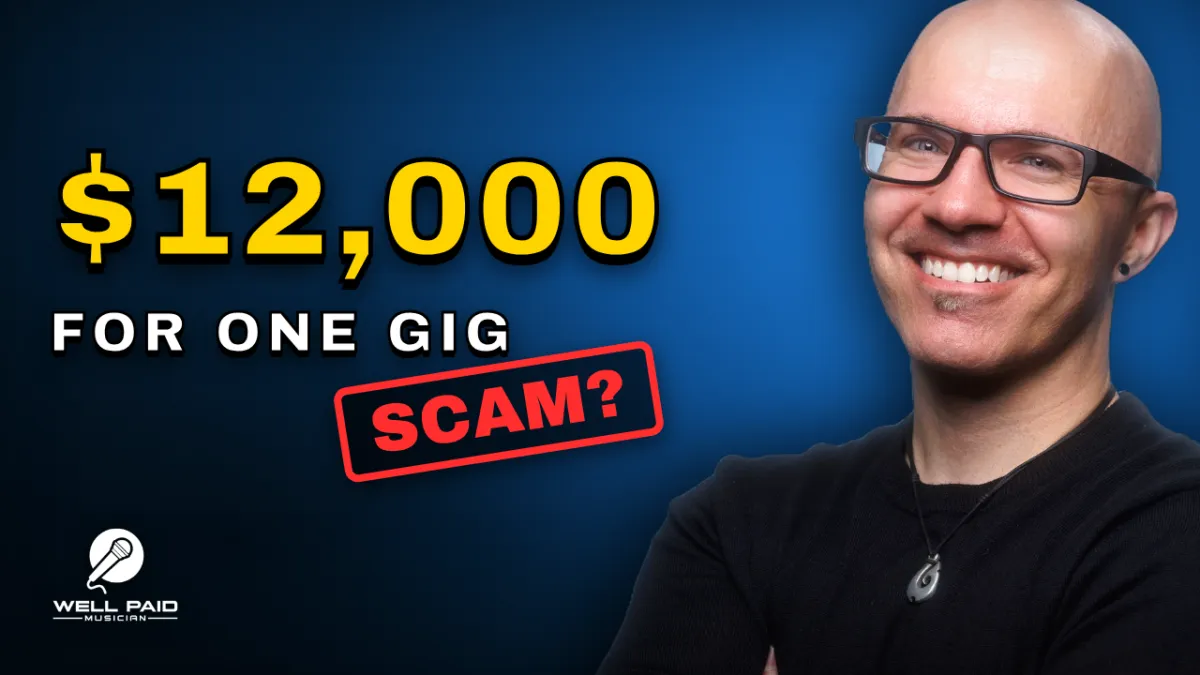
Are You Lucky, or Are You Prepared? How a $4,000 "Scam" Gig Turned Into $12,000 Corporate Events
A few years ago, WPM coach Marty got an email from a booking agent he’d never heard of, offering him a $4,000 corporate gig.
His first thought? “This is definitely a scam.”
It wasn’t. And that one email eventually turned into $12,000 corporate events — flights, five-star hotel, full production, all covered — for him alone.
Here’s the thing, though. That email wasn’t luck. Marty had spent two months building the exact trap that caught it. And the difference between musicians who get one lucky break and musicians who build a career out of one is the subject of this week’s Coaches Corner: are you lucky, or are you prepared?
Luck only pays if you’re prepared for it
Marty puts it simply:
“If you’re lucky but you’re not prepared, you end up getting one opportunity — and then that’s the end of it.”
Prepared but not lucky? You’ll make your own luck. Prepared and a little lucky? That’s when one small opportunity turns into years of work. From the outside it just looks like you’re a lucky person. You’re not. You’re ready.
Here’s the chain of events, in order, so you can see exactly where the “luck” actually was.
Step 1: He built the page before anyone was looking
Marty wanted corporate work but had no way in — his content was all weddings and backyards. So any time he played an event that even looked corporate, he captured it. He paid a videographer to shoot the middle hour of those gigs and cut it into a corporate promo video. Then he built a dedicated corporate-events page on his website, written for search: “corporate entertainment,” “corporate solo singer.”
It took about two months. Nothing happened right away.
Step 2: The “scam” email
Then a booking agent in Boston needed a high-energy solo act for a company event in Salt Lake City. He couldn’t find one locally, widened his search, and Marty’s corporate page came up. He watched the video, read the page, and sent the offer — the $4,000 one Marty almost deleted.
That’s the lucky moment. One stranger, one search. Everything after it was preparation.
Step 3: He delivered an $8,000 show for $4,000
Marty didn’t wing the gig. He spent a month building the show: setlist, planned interactive moments, his own lighting, two banners with his name and a QR code. Then he spent another $1,000 on a videographer to film it.
“I basically delivered an $8,000 show for $4,000.”
That promo video alone booked him five or six more corporate events at $4,000–$6,000 each.
Step 4: The chain keeps going
The same company brought him back the next year for a bigger event in Park City — as a duo, so he added a saxophonist and built a whole new show. New show, new footage, second promo video. The videographer at that gig was so impressed he referred Marty to a wedding planner, which turned into three or four out-of-state weddings on its own.
Then someone showed both promo videos to the company’s CEO — a Fortune 500 CEO who normally hired a 10-piece band for the annual black-tie gala in downtown Boston. He watched the videos and said: get these guys down here.
Flights, three nights in a five-star hotel, food, transport, full sound and lights — all provided. Plus $8,000.
Today that same company still hires Marty, now as a solo DJ. The check is $12,000.
One SEO page. One promo video. One “scam” email. Everything else was preparation compounding.
Being prepared cuts both ways
Marty breaks preparation into two halves — and most entertainers only ever think about the first one.
1. Prepared for when things go wrong. Marty plugs his entire PA into a silent battery generator at every gig. He’s needed it exactly once — the venue lost power mid-event and his show never stopped. The clients never even knew. That venue put him on their preferred vendor list because of it. He also runs an iPad playlist muted into his mixer at all times; when his laptop froze mid-song at a wedding, the music was back in three seconds and the bride never noticed.
Your version might be simpler: a spare capo, a backup power adapter, extra cables, a battery-powered speaker. You’ll almost never need them. But “the party will never stop, no matter what” is a line that books gigs.
2. Prepared for when things go right. This is the one nobody does. Someone walks up on your set break and says, “You were awesome — got a card?” Can you hand them one within 20 seconds? Is there signage with your name and a QR code for the person filming you from the dance floor? When they scan it, does it land on a website you’re proud of — or one you’d apologize for?
Luck is someone deciding they want to hire you. Preparation is making sure that moment doesn’t evaporate.
Preparation is also how you win the people who book you
One more story from the episode. Before Marty ever worked with a high-end wedding planner named Haynes, he reached out first — introduced himself, walked her through his process, his contract, his client deadlines. The week of the wedding he confirmed every timeline detail. On the day, he was fully set up and sound-checked an hour early, printed timeline in hand.
Ten minutes after that wedding started, she had already referred him to one of her brides for the following year. Before the first dance. That one relationship has turned into over $20,000 of work.
Start with one thing
Don’t try to fix a hundred things. Marty’s challenge from the episode: pick one thing that makes you more prepared for something going wrong, and one for something going right. A backup speaker. A real business card. A corporate page on your site.
“Your career is like fishing with a net. If your net has holes, every fish swims right out.”
Tighten the net. Then, when the right person finds you — and eventually, someone will — you won’t get one gig out of it. You’ll get a career.
Want the full system working musicians use to land high-paying gigs like these? That’s exactly what we do inside Well Paid Musician.
Watch the full episode: Are You Lucky or Are You Prepared?

Ready to scale your music business to six figures?
Want to Be A Part Of Our Success Story?
Hear what WPM students are saying about the program